
Keyword deep research: Tools and techniques
 Author Pavol DragMay 12, 2020 · 4 min read · Updated: May 26, 2020

Source: Unsplash
These advanced tools and techniques mean the difference between an average keyword search and a KW survey that really draws customers to your site.
What are real customers looking for?
It looks like an easy question, but once you start "digging" deeper, things change.
Finding the words and phrases that are characteristic of your business is a common thing, but this fact alone does not mean that everyone who searches for them is your customer.
If you also focus on voice search, the whole keyword research process is even more complicated.
While a PPC campaign will allow us to enter the world of "paid" KWs that bring customers and leads, there are many other ways to find out what customers are really looking for, and these solutions are completely free of charge.
As an SEO specialist, I have a responsibility to get traffic to my clients' websites, but of course that's not the only responsibility.
Anyone who has had even a little experience with SEO knows well that other, even more important KPIs soon emerge that bother the client more:
- How does organic traffic contribute to the overall ROI?
- Are these visitors converting?
- If they don't convert, why is that?
- How do I increase my conversion rate?
- Which traffic sources are suitable if I don't want to pay
In SEO, you are still struggling with the reality of gaining visitors who (as you firmly hope) will turn into potential customers or sales.
It is at this point that an in-depth keyword research process comes in handy.
Keyword Evolution

We are at a time when intent-based searches are more important to us than pure volume.
As search engines try to better understand the user, we need to be just as savvy, which means we need to know much more about our searches and customers.
Most of us already understand KW research to some extent, but if you don't, or want to improve your skills, there are many tools and tactics you can use.
Below are my tools and techniques that have led me to understand the difference between average keyword research and targeted keyword research that ultimately leads to potential customers.
1. Meet the people you're targeting
Knowing your target audience is essential, not just superficially, but really in depth.
Therefore, it is necessary to take the next step - to learn the phrases customers use as well as how they describe their problems.
SEO is marketing. This means that our keywords should be subject to this concept.
Audience analysis can help you identify the people you're targeting. This makes keyword research more personal and relevant.
2. Go beyond traditional KW tools

In this case, I definitely recommend one of the following:
- Google KW planner
- Moz KW Explorer
- SEMrush
- Ahrefs Keywords Explorer
- BrightEdge Data Cube
- Ubersuggest
- KeywordTool.io
There is no doubt that they streamline the process of finding relevant words and phrases, but they also provide suggested or related terms that help us compile our kw shortlists.
For example, Demographics Pro is designed to give you a detailed view of your social media audience, giving you a better feeling of who might be looking for your brand or products.
You can see what customers are interested in and what they might be looking for.
It guides you to track the relevant keywords that your customers are using and helps you get rid of the KWs you think they use but they don't.
With Followerwonk you can also track competing and other brands (as well as their audiences) as well as KW opportunities.
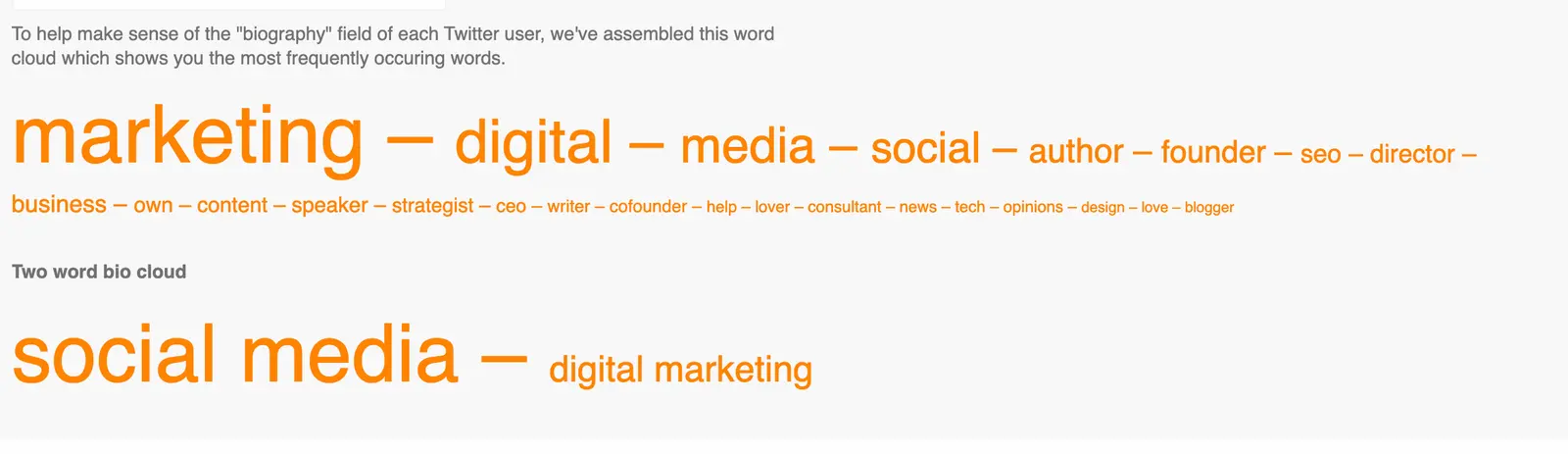
You can get similar information about your potential customers with the free Social Searcher tool.
It's not hard to use - just enter keywords.
You can also select a source and choose a post type.
You can see recent posts, users, sentiment and even related words.
Example Social Searcher report:
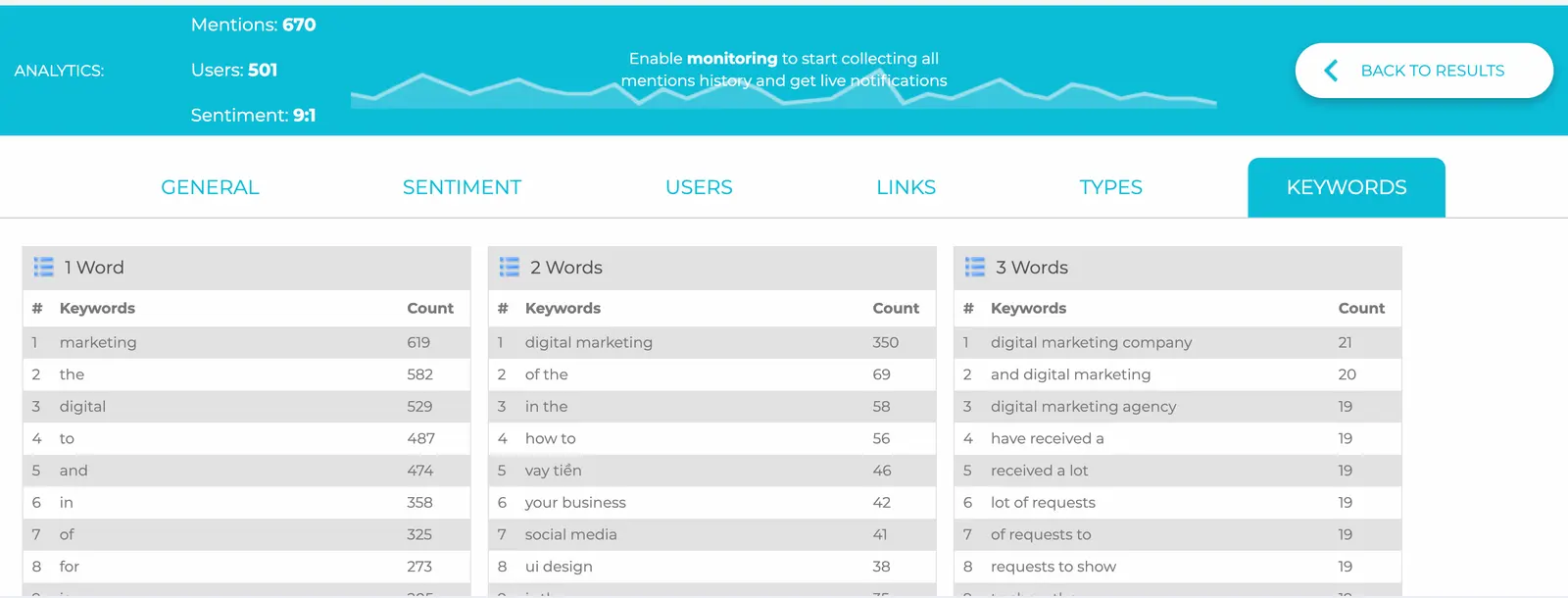
Pro tip: let's say you want to create and optimize videos for specific keywords.
This tool allows you to filter by YouTube to see what already exists and get an idea of how you can optimize your videos.
Another great tool is Seed Keywords - this tool allows you to create a search scenario that you can then send to your friends.
The tool can be useful if you are in a specialized industry and it is difficult to find any more relevant keywords.
3. Identify trends
To capture relevant and current traffic, you need to identify trending keywords.
For example, if you're optimizing a site that contains seasonal products or services, you need to know what people are looking for and when.
During the COVID-19 pandemic, there are different types of keyword trends that go beyond the common words and phrases of the topic.
For example, people were looking for information on how to avoid gaining weight and how to move a team into a virtual environment. - Google Trends is the best source here.
If possible, be sure to filter by date and location.
4. Explore search intent
Once you get a feel for some of the keywords you want to target, it's time to take the next step.
I want to know what type of content ranks for these KWs, which gives me an idea of what Google and potential customers consider authoritative.
A simple example (there are many other types of intent that occur during the buyer's journey): let's focus on two main categories of intent - purchase intent and knowledge intent.
Let's say you're targeting the term "organic coffee":
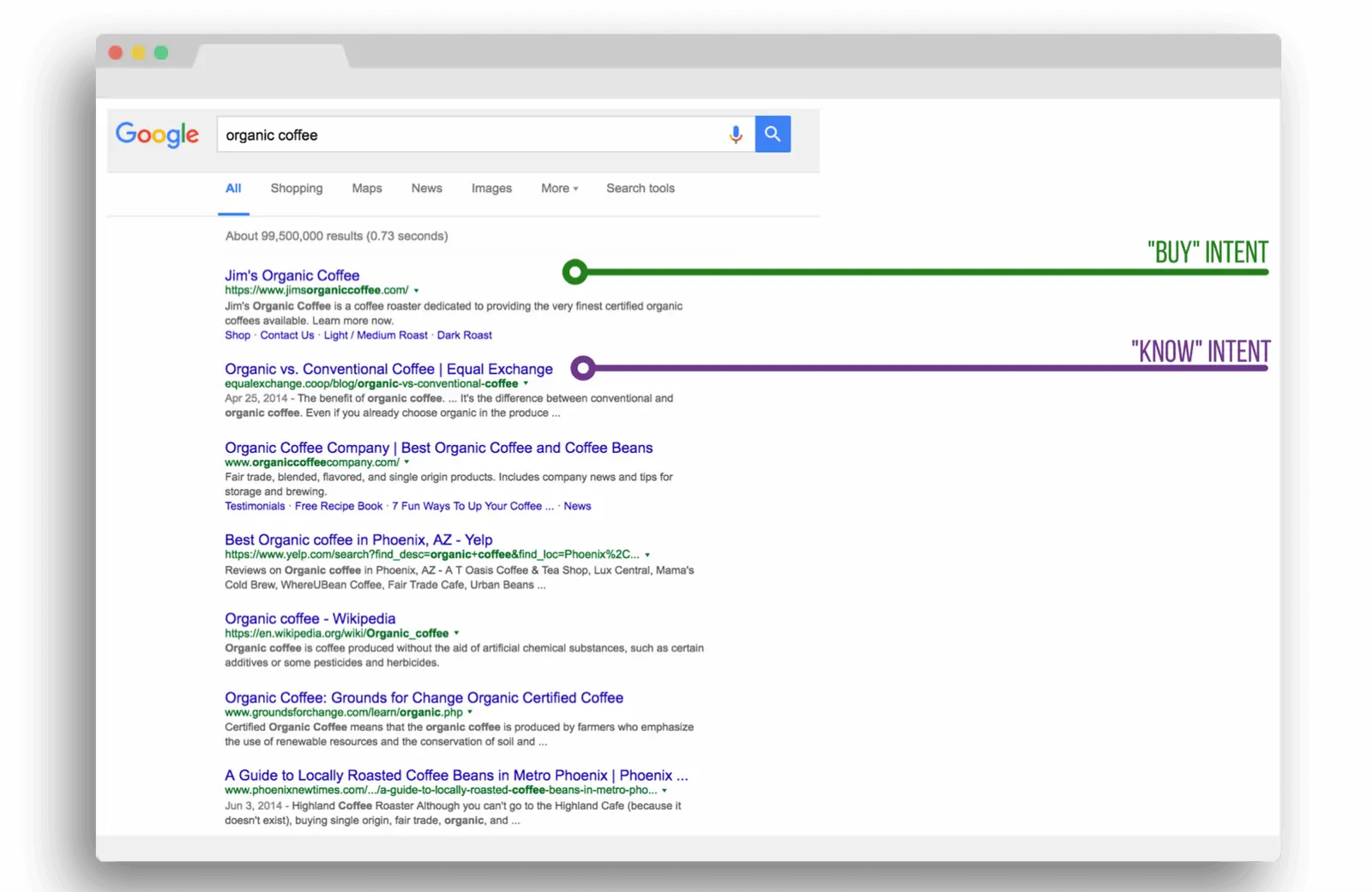
Based on what is in the results, Google believes that the intent of the search could either be to buy coffee or simply to learn more about it.
In this case, the page I'm trying to optimize may be focused on both intents.
Another example:

In this case, if I targeted the keyword "safe weed removal", I would create or optimize a page that provides this information - in other words, one that satisfies the search intent of getting more information about removing weeds.
There are many tools that can help you determine which pages rank for your targeted keywords, including SpyFu, SEMrush, and Ahrefs.
5. From keywords to questions
People are looking for answers to their questions, which in itself is not interesting, but we should take every opportunity to answer these questions.
Therefore, never forget long-tail keywords.
Some of my favorite tools to help you find questions are:
- AnswerthePublic.
- Question Analyzer by BuzzSumo.
- AlsoAsked.com.
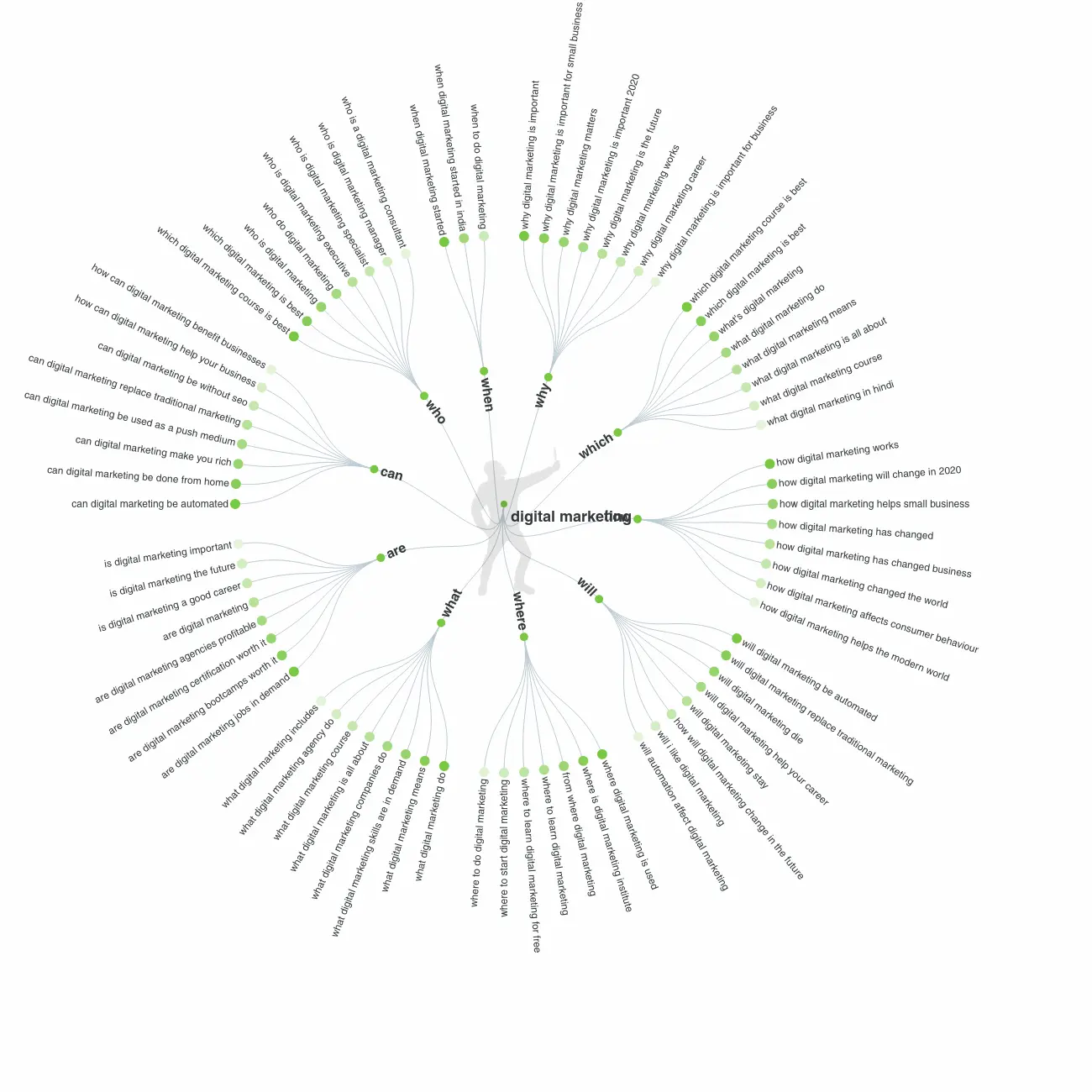
AnswerThePublic uses autocomplete technology to surface common questions and phrases associated with your keywords.
It creates a data visualization to help you get a better overview of the topics people search for.
Use this tool to get a list of questions, not to mention other data not shown below:
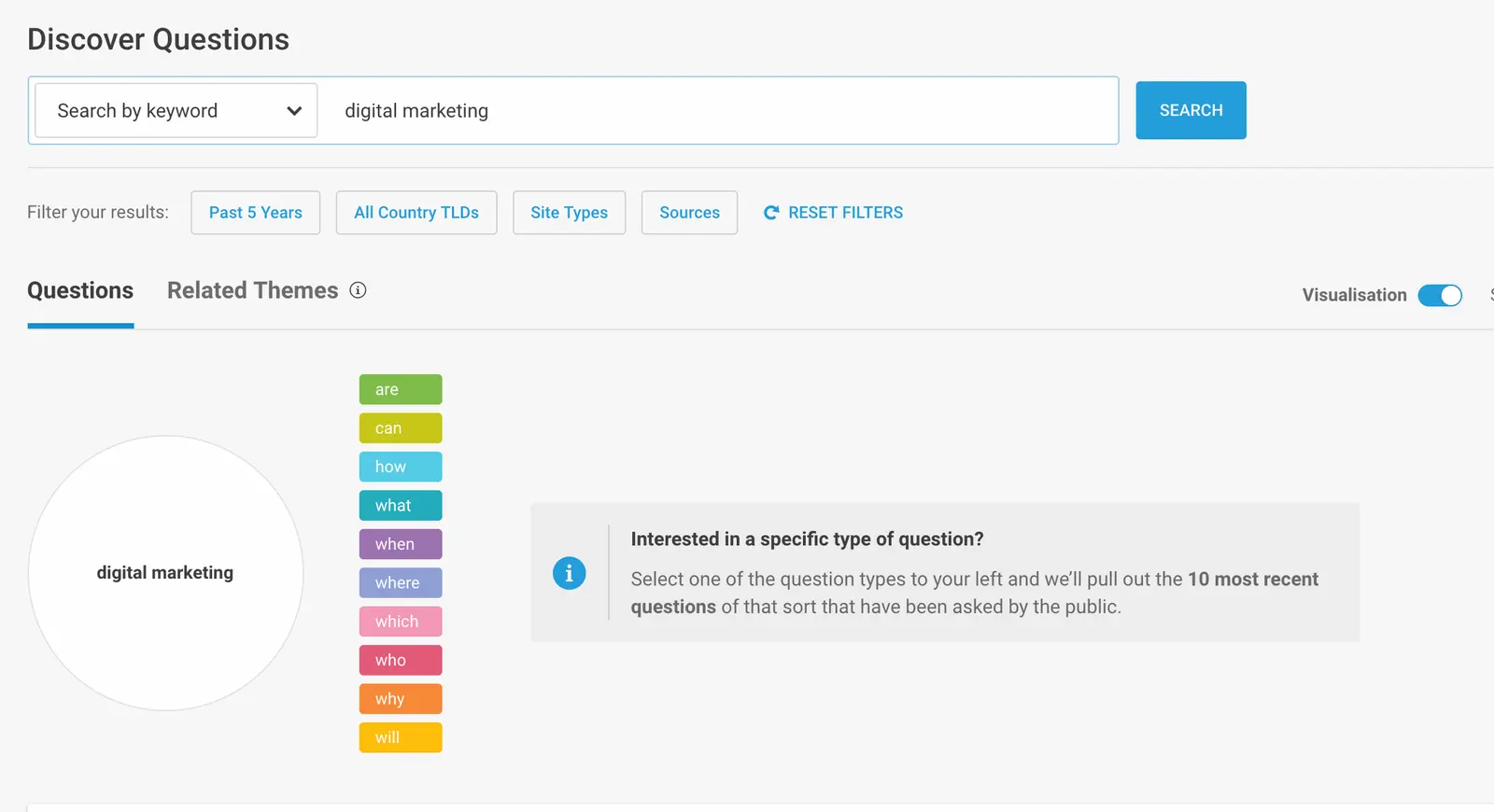
Question Analyzer by BuzzSumo searches for the most popular questions that are asked on countless forums and websites including Amazon, Reddit and Quora.
If I want to know what people are asking about "digital marketing", I can get this information and organize it by type of question:
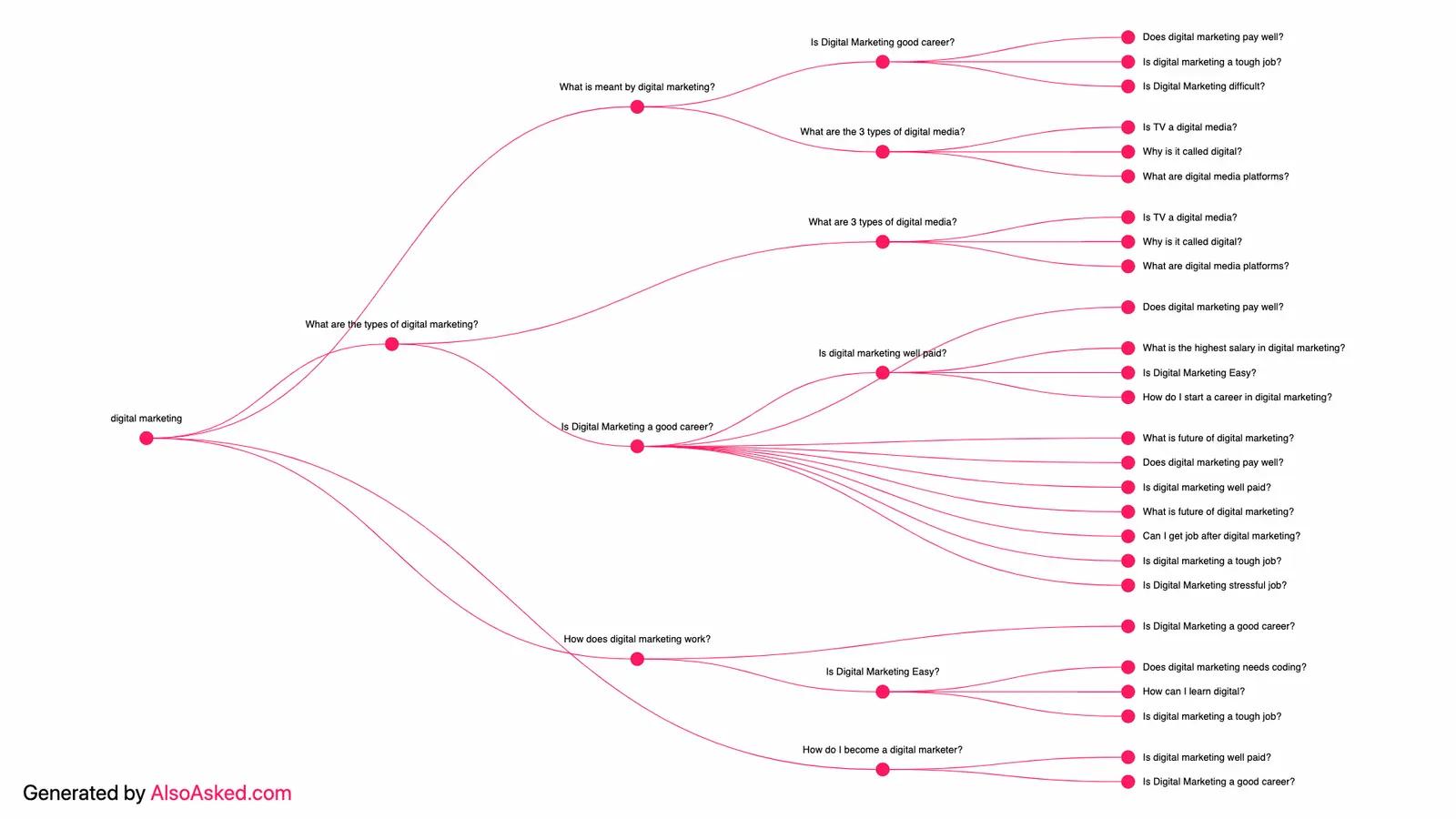
Another useful one is based on data from Google's People Also Ask.
This tool provides an insight into long-tail searches - the relationships between topics and questions.
Below is an example of what you might see on AlsoAsked.com.
In conclusion
New techniques and tools make our work much easier.
Your focus should be on how to attract customers to your site by using the right keywords and answering their queries. If you learn to do it right, Google will rank you as a relevant partner and become a long-term source of new customers for you.
Recent Posts
All blogs
Pavol DragSocial media
Instagram - New sticker for promoting the company profile in Stories
Instagram is testing stickers that have allowed companies a new type of promotion of their business profile in stories. This will give brands another way to make their business accounts visible.
Read article
Pavol DragSEO
Google May Core Update 2020 – What Do We Know About It?
The May Core update affected several industries - what we know about it so far
Read article